
Uncategorized
Where to Buy Shrooms Legally: A 2026 Compliance Guide

Oct
The landscape for purchasing psilocybin mushrooms has transformed dramatically over the past few years. While federal prohibition remains in place across most of the United States, a growing number of jurisdictions have created legal pathways for regulated access. Understanding where to buy shrooms legally requires navigating a complex patchwork of state regulations, therapeutic programs, and international options. This guide examines the legitimate channels available in 2026, helping you make informed decisions that prioritize safety, legality, and intentional use.
Legal Frameworks for Psilocybin Access
The regulatory environment for psilocybin mushrooms varies significantly depending on jurisdiction. At the federal level in the United States, psilocybin remains a Schedule I controlled substance, meaning possession and distribution are prohibited. However, individual states and cities have begun implementing their own frameworks that create exceptions to federal law within their borders.
Two primary models have emerged: therapeutic access programs and decriminalization measures. Therapeutic programs establish licensed facilities where adults can consume psilocybin under professional supervision. Decriminalization policies typically make enforcement of psilocybin possession the lowest law enforcement priority without creating retail markets.
Understanding these distinctions is essential when considering where to buy shrooms legally. The Oregon Health Authority’s psilocybin services framework represents the most developed therapeutic model, while cities like Denver and Oakland have adopted deprioritization approaches that don't establish retail channels.
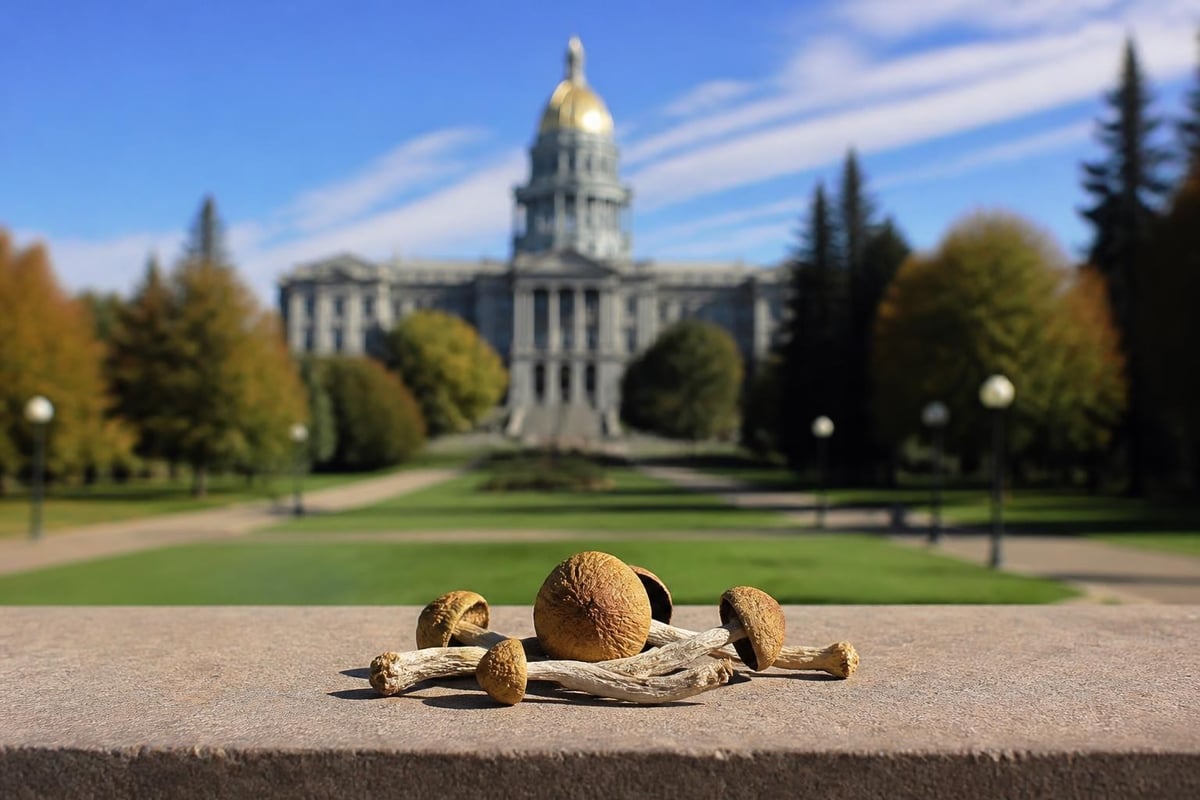
Oregon: The First Regulated Market
Oregon pioneered the regulated psilocybin market through Measure 109, which voters approved in 2020. By 2026, the state has established a mature network of licensed service centers where adults aged 21 and older can legally access psilocybin products.
How Oregon's System Works
The Oregon model doesn't allow traditional retail purchases. Instead, participants must consume psilocybin at licensed service centers under the guidance of trained facilitators. The process involves several steps:
- Preparation session with a licensed facilitator to discuss intentions and medical history
- Administration session at a licensed service center where psilocybin is consumed on-site
- Integration session to process the experience with facilitator support
Service centers cannot sell products for off-site consumption. All psilocybin products must be manufactured by state-licensed producers and tested by accredited laboratories. The detailed regulatory framework ensures product safety and consistent dosing.
Costs and Accessibility
Oregon psilocybin services typically range from $1,500 to $3,500 for a complete preparation-administration-integration package. Some facilitators offer sliding-scale fees or payment plans. No medical diagnosis or prescription is required, making Oregon one of the most accessible places where to buy shrooms legally through therapeutic channels.
The state does not require Oregon residency, attracting participants from across the country who travel specifically to access these services. As of 2026, over 40 licensed service centers operate throughout Oregon, concentrated in Portland, Eugene, and Bend.
Colorado's Natural Medicine Framework
Colorado voters approved Proposition 122 in 2022, establishing a regulatory system for "natural medicines" including psilocybin and psilocin. The Colorado framework shares similarities with Oregon but includes some distinct features.
Healing Centers vs. Service Centers
Colorado uses the term "healing centers" rather than service centers. Like Oregon, these facilities provide supervised psilocybin experiences rather than retail sales. The legislative framework established a two-phase rollout, with healing centers beginning operations in late 2025.
Colorado's program emphasizes harm reduction and cultural competency training for facilitators. The state also created provisions for group sessions, which Oregon initially limited.
| Feature | Oregon | Colorado |
|---|---|---|
| Launch Date | 2023 | 2025 |
| Minimum Age | 21 | 21 |
| Group Sessions | Limited | Permitted |
| Residency Requirement | None | None |
| Average Cost | $1,500-$3,500 | $1,200-$3,000 |
Growing Accessibility
Colorado's healing center network continues expanding throughout 2026. Major cities including Denver, Boulder, and Colorado Springs now host multiple licensed facilities. The state's emphasis on affordability and accessibility has resulted in somewhat lower average costs compared to Oregon.
Both states represent the clearest answer to where to buy shrooms legally within a therapeutic context. Their regulated frameworks prioritize safety while creating legitimate access channels.
International Options: Jamaica and Beyond
While U.S. state programs require on-site consumption, international destinations offer different models. Jamaica has emerged as a popular location for those seeking where to buy shrooms legally outside traditional medical frameworks.
Jamaica's Legal Status
Psilocybin mushrooms occupy a unique position in Jamaican law. They are neither explicitly legal nor specifically prohibited, creating a de facto permissive environment. Several retreat centers and wellness facilities openly offer psilocybin experiences, and local retailers have begun selling mushroom products to tourists and locals.
Jamaica's approach differs significantly from the regulated U.S. programs. There are no licensing requirements for facilitators, no standardized testing protocols, and minimal government oversight. This creates both opportunities and risks for participants.
Retreat Centers vs. Local Markets
Many visitors to Jamaica choose organized retreat centers that provide structured psilocybin experiences with varying levels of professional support. These retreats typically cost $1,000-$5,000 for multi-day packages including accommodation, meals, and facilitation.
Alternatively, some travelers purchase mushrooms directly from local vendors or shops. This option offers more flexibility but less safety assurance regarding product quality, dosing accuracy, and professional guidance.
Netherlands and Portugal
The Netherlands tolerates psilocybin-containing "magic truffles" (sclerotia), which are sold in "smart shops" throughout Amsterdam and other cities. While dried psilocybin mushrooms remain technically prohibited, fresh truffles containing the same active compounds are legally available.
Portugal decriminalized personal possession of all drugs in 2001, including psilocybin mushrooms. However, decriminalization doesn't create retail markets. Possession of small amounts won't result in criminal charges, but there are no legal vendors or shops.
Clinical Trials and Research Access
Another avenue for legal psilocybin access involves participation in clinical research. Multiple universities and medical institutions conduct FDA-approved psilocybin studies examining therapeutic applications.
How to Access Clinical Trials
Research participants receive psilocybin legally under medical supervision without cost. Many studies focus on treatment-resistant depression, end-of-life anxiety, or substance use disorders. Participants typically must meet specific diagnostic criteria.
Major research institutions conducting psilocybin trials include Johns Hopkins University, NYU Langone Health, and UCSF. ClinicalTrials.gov maintains updated listings of active studies recruiting participants.
Those struggling with treatment-resistant depression or anxiety may find that magic mushrooms offered through clinical trials provide both therapeutic benefit and legal access. These programs represent rigorous, evidence-based approaches to psilocybin therapy.
Limitations and Waitlists
Clinical trial access involves significant limitations. Studies have strict inclusion and exclusion criteria, often lengthy waitlists, and require multiple screening visits. Participants cannot choose their dosage or setting preferences, as protocols are standardized for research validity.
Nevertheless, clinical trials remain one of the few federally legal pathways where to buy shrooms legally becomes irrelevant-participants receive psilocybin through legitimate medical research channels.
Canadian Special Access Program
Canada maintains federal prohibition of psilocybin but created compassionate access provisions for seriously ill patients. Health Canada’s framework allows healthcare practitioners to request access to restricted drugs including psilocybin for patients with serious or life-threatening conditions.
Requesting Access
The Special Access Program (SAP) requires a healthcare practitioner to submit detailed documentation demonstrating that conventional treatments have failed and that potential benefits outweigh risks. Applications are reviewed individually, and approval is not guaranteed.
Approved patients receive psilocybin through authorized suppliers under medical supervision. This represents perhaps the most medically rigorous answer to where to buy shrooms legally within a therapeutic framework, though accessibility remains extremely limited.
By 2026, several hundred Canadians have received legal psilocybin access through this program, primarily for end-of-life distress and treatment-resistant mental health conditions.
Decriminalization vs. Legal Purchase
Decriminalization measures in cities like Denver, Oakland, Seattle, and Washington, D.C. have created confusion about where to buy shrooms legally. These policies make psilocybin enforcement the lowest law enforcement priority but do not create legal retail markets.
What Decriminalization Means
Decriminalization typically applies only to personal possession and cultivation of small amounts. It doesn't establish licensed vendors, regulate product quality, or create legal distribution channels. Legal analysis of decriminalization measures clarifies that these policies offer prosecutorial discretion rather than affirmative legalization.
In decriminalized jurisdictions, purchasing psilocybin still involves legal risk, even if enforcement is deprioritized. No legitimate retail establishments can openly sell psilocybin products in these areas.
Personal Cultivation
Some decriminalized cities explicitly include personal cultivation provisions. Growing psilocybin mushrooms at home for personal use may be permitted or deprioritized, offering an alternative to purchasing from questionable sources.
- Denver: Deprioritizes cultivation and possession for personal use
- Oakland: Decriminalizes all entheogenic plants and fungi
- Seattle: Makes enforcement lowest priority for adults
- Washington, D.C.: Permits cultivation and possession, prohibits sales
Personal cultivation requires research, proper equipment, and adherence to local plant limits. It represents a legal gray area rather than a clear path for where to buy shrooms legally.
Safety and Quality Considerations
Regardless of jurisdiction, product safety should be paramount when accessing psilocybin. Regulated markets in Oregon and Colorado mandate laboratory testing for potency, contaminants, and heavy metals. Unregulated sources offer no such assurances.
Testing and Verification
Licensed service centers and healing centers provide:
- Potency testing ensuring accurate dosing
- Contaminant screening for pesticides, bacteria, and mold
- Heavy metal testing verifying product safety
- Consistent labeling with clear potency information
Unregulated sources, whether international markets or illicit vendors, cannot guarantee these safety standards. Contaminated products, inaccurate dosing, and misidentified species pose significant health risks.
Harm Reduction Resources
Organizations like DanceSafe and The Zendo Project offer drug checking services at festivals and events, allowing individuals to test substances for purity and identity. While not a substitute for regulated markets, these services provide valuable harm reduction support.
Payment and Privacy Considerations
Purchasing psilocybin through legal channels often involves standard payment methods, creating potential privacy concerns. Service centers in Oregon and Colorado typically accept credit cards, debit cards, or checks, generating traditional financial records.
For those prioritizing transaction privacy, some facilitators accept cryptocurrency payments. Services like MoneroSwap enable private cryptocurrency exchanges without KYC requirements, allowing participants to convert other cryptocurrencies to privacy-focused options like Monero before payment.
Traditional banking relationships may not align with all participants' privacy preferences, making alternative payment methods increasingly relevant in legal psilocybin markets.
Emerging Markets and Future Outlook
Additional jurisdictions continue developing psilocybin frameworks. Massachusetts voters approved a similar ballot measure in 2024, with regulatory implementation expected throughout 2026-2027. Other states including California and New York have active legislative proposals under consideration.
The trend suggests expanding access to legal psilocybin over coming years, though federal prohibition continues limiting interstate commerce and complicating banking for licensed businesses.
Medical Prescription Models
Some proposed frameworks explore prescription models rather than facilitator-guided models. This would allow physicians to prescribe psilocybin for specific conditions, with patients consuming products at home rather than in supervised settings.
No U.S. jurisdiction has fully implemented a prescription model as of 2026, though pilot programs are under discussion. This could represent the next evolution in answering where to buy shrooms legally through pharmacy-based distribution.
Navigating Legal Gray Areas
Many people exploring where to buy shrooms legally encounter sources that operate in legal gray areas-neither fully prohibited nor explicitly permitted. These include:
- "Gifting" services that claim to provide psilocybin as gifts alongside purchased merchandise
- Spore vendors selling spores for "microscopy purposes" with implied cultivation use
- Underground facilitators offering guided experiences outside regulatory frameworks
These sources carry legal risks despite marketing that suggests otherwise. Law enforcement may view gifting services as disguised sales, and participation could result in prosecution regardless of local decriminalization measures.
For those serious about safe, legal, and informed psilocybin use, regulated programs in Oregon and Colorado, clinical trials, or international retreat centers with established reputations represent the most defensible options.
Understanding where to buy shrooms legally in 2026 requires careful attention to jurisdictional nuances and regulatory frameworks. Oregon and Colorado offer the most developed legal access through licensed service centers, while international options and clinical trials provide alternative pathways. Toms Psychedelic Delivery supports your journey toward safe, intentional psilocybin exploration with premium products and educational resources designed for mindful personal development. Explore our curated selection and discover how informed use can support your therapeutic goals and consciousness expansion.
