
Mushrooms
Psychedelic Mushrooms: Science, Safety & Mindful Use

Oct
Psychedelic mushrooms have emerged from the shadows of prohibition into the spotlight of rigorous scientific inquiry. Once relegated to counterculture movements and whispered about in hushed tones, these fungi containing psilocybin are now the subject of peer-reviewed research at prestigious institutions worldwide. As we navigate 2026, the conversation around psychedelic mushrooms has shifted dramatically from stigma toward evidence-based understanding, therapeutic applications, and harm reduction. For those considering these powerful compounds for personal growth or therapeutic exploration, understanding the science, safety protocols, and legal landscape has never been more critical.
Understanding Psilocybin and Its Effects
Psychedelic mushrooms contain psilocybin, a naturally occurring psychedelic compound that the body converts into psilocin after ingestion. This metabolite interacts primarily with serotonin receptors in the brain, particularly the 5-HT2A receptor, triggering profound changes in perception, cognition, and consciousness. Recent neuroscience research on psilocybin’s cellular mechanisms has illuminated exactly how these molecules interact with specific brain cell types to produce their characteristic effects.
The subjective experience varies significantly between individuals and depends on numerous factors including dose, mindset, environment, and personal neurochemistry.
Typical Effects and Duration
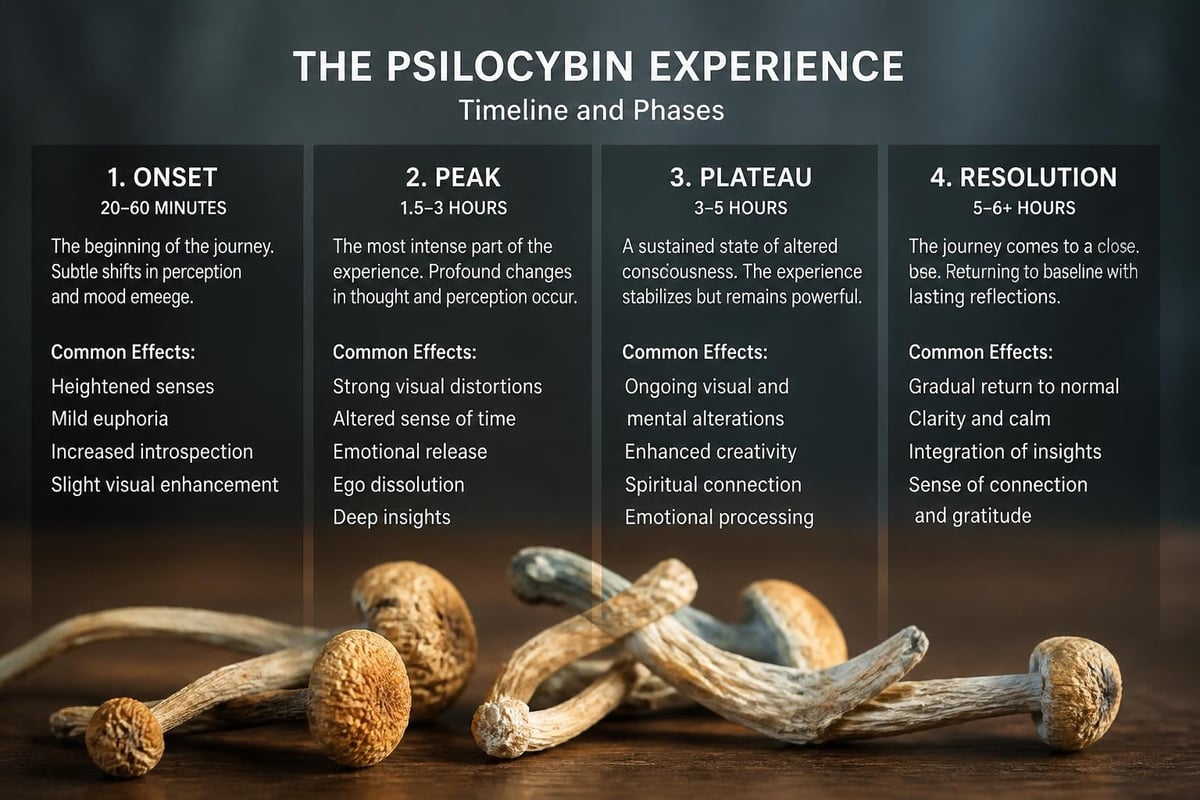
Users commonly report altered visual perception, enhanced emotional sensitivity, dissolution of ego boundaries, and profound insights into personal patterns and relationships. The experience typically unfolds in phases:
- Onset (30-60 minutes): Initial changes in perception, mild visual distortions, shifting emotional states
- Peak (2-3 hours): Intense perceptual changes, deep introspection, emotional breakthroughs, potential mystical experiences
- Plateau (1-2 hours): Gradual stabilization while maintaining altered consciousness
- Resolution (2-3 hours): Slow return to baseline, often accompanied by reflection and integration
The entire journey typically lasts between six and eight hours, with residual effects potentially persisting into the following day. Physical effects remain relatively mild compared to the psychological impact, usually limited to pupil dilation, slight changes in heart rate and blood pressure, and occasional nausea during onset.
Scientific Evidence and Therapeutic Applications
The renaissance in psychedelic research has produced compelling evidence for therapeutic applications. A comprehensive review of psychedelic science and medicine published in 2025 synthesized findings from dozens of clinical trials, revealing significant promise for treatment-resistant conditions that conventional therapies struggle to address.
Clinical trials have demonstrated particularly strong results in several areas:
Depression and Treatment-Resistant Depression: Multiple studies have shown that psilocybin-assisted therapy can produce rapid and sustained improvements in depressive symptoms. For individuals who have tried multiple antidepressants without success, magic mushrooms represent a potential breakthrough in addressing major depressive disorder and treatment-resistant depression, with some clinical participants experiencing symptom relief lasting months after a single guided session.
Anxiety and Existential Distress: Research with terminally ill patients has revealed that psychedelic mushrooms can significantly reduce existential anxiety and fear of death, helping individuals find peace and meaning during their final months. This application demonstrates the profound capacity for psilocybin to shift perspective on mortality and suffering.
Addiction and Substance Use Disorders: Preliminary studies suggest potential for treating alcohol dependence, tobacco addiction, and other substance use disorders, with mechanisms involving disruption of rigid thought patterns and renewed motivation for behavior change.
| Condition | Research Status (2026) | Typical Protocol | Success Indicators |
|---|---|---|---|
| Treatment-Resistant Depression | Phase 3 trials ongoing | 2-3 sessions with therapy | Sustained remission 6+ months |
| End-of-Life Anxiety | Published Phase 2 results | 1-2 sessions with integration | Reduced anxiety, improved quality of life |
| PTSD | Phase 2 expanding | 3 sessions over 8 weeks | Symptom reduction, processing trauma |
| Addiction (alcohol, tobacco) | Phase 2 trials | Multiple sessions + counseling | Abstinence rates, craving reduction |
These therapeutic outcomes depend critically on the integration of psychedelic experiences with professional psychological support, structured preparation, and post-session processing.
Safety Protocols and Harm Reduction
While psychedelic mushrooms demonstrate a favorable safety profile compared to many substances, responsible use requires attention to multiple risk factors and comprehensive harm reduction practices.
Medical and Psychological Screening
Not everyone should use psychedelic mushrooms. Contraindications include:
- Personal or family history of psychotic disorders or schizophrenia
- Current use of certain medications, particularly MAOIs and some antidepressants
- Severe cardiovascular conditions
- Pregnancy or breastfeeding
- Unstable mental health conditions without professional support
The psychological safety of any psychedelic experience depends heavily on set and setting. Set refers to mindset, expectations, and emotional state entering the experience. Setting encompasses the physical and social environment where the journey occurs.
Proper Identification and Dosing
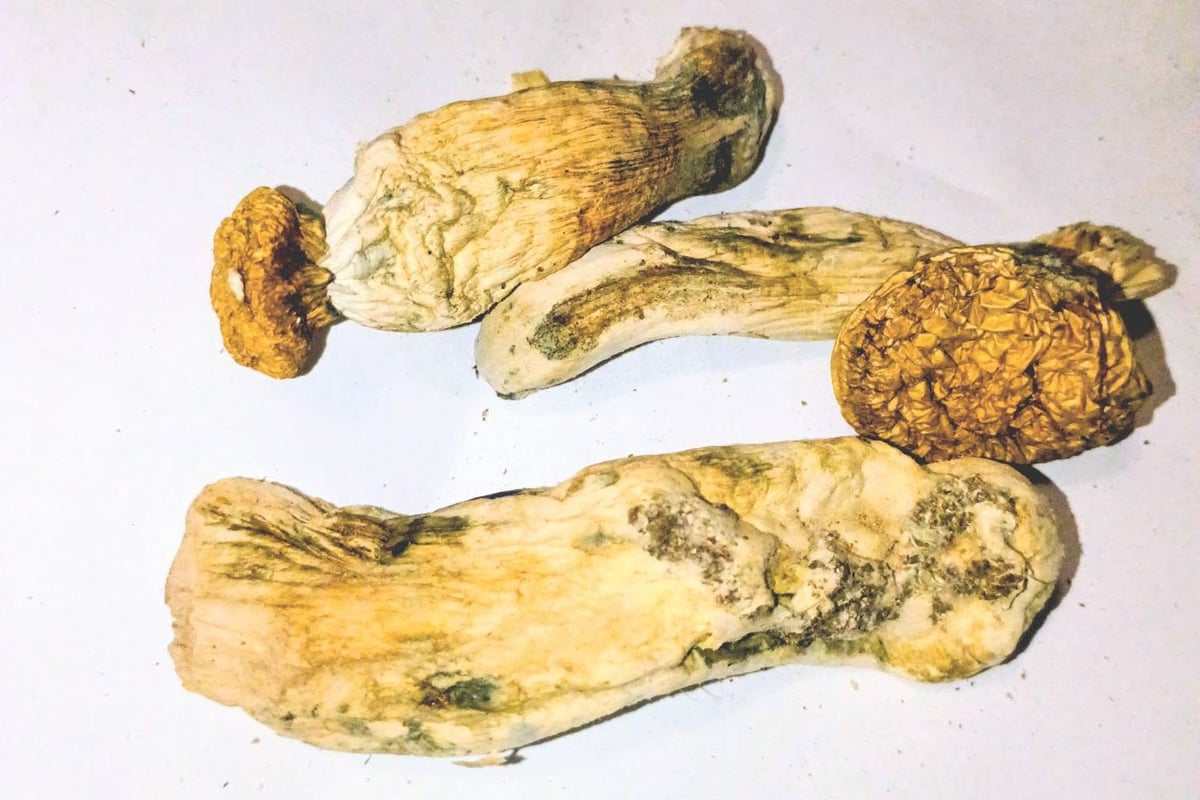
One critical safety concern involves correctly identifying psychedelic mushrooms versus potentially toxic species. The Poison Control guidance on mushroom safety provides essential information for recognizing and responding to accidental ingestion of poisonous varieties. Never consume mushrooms from unknown sources or forage without expert mycological knowledge.
Dosing requires precision and respect:
- Microdose: 0.1-0.3 grams dried (sub-perceptual, for functional benefits)
- Low dose: 0.5-1.5 grams dried (mild effects, maintained functionality)
- Moderate dose: 2-3 grams dried (full psychedelic experience)
- High dose: 3.5-5+ grams dried (intense, potentially overwhelming)
First-time users should always start with lower doses to assess individual sensitivity. Body weight, tolerance, mushroom potency, and stomach contents all influence effects.

Legal Status and Global Perspectives
The legal landscape surrounding psychedelic mushrooms continues to evolve rapidly across jurisdictions. As of 2026, legal status varies significantly:
Decriminalized or Legal Therapeutic Use: Several U.S. cities and states have decriminalized possession or established regulated therapeutic frameworks. Oregon pioneered licensed psilocybin services in 2023, with Colorado and other jurisdictions following. Canada permits access through Special Access Program exemptions.
Research Exemptions: Many countries allow licensed research institutions to study psilocybin under controlled conditions, even where recreational use remains prohibited.
Prohibited Substances: Psychedelic mushrooms remain Schedule I substances under U.S. federal law and are similarly restricted in most countries worldwide.
The WHO’s assessment and policy guidance reflects ongoing international dialogue about appropriate scheduling, medical potential, and public health considerations. The tension between emerging evidence of therapeutic value and existing prohibition frameworks continues to generate policy debates globally.
Species, Cultivation, and Quality Considerations
Over 200 species of mushrooms contain psilocybin, though several dominate in cultivation and traditional use:
- Psilocybe cubensis: Most commonly cultivated, moderate potency, reliable growing characteristics
- Psilocybe semilanceata (Liberty Caps): Wild-growing in temperate regions, higher potency
- Psilocybe azurescens: Among the most potent species, native to Pacific Northwest
- Psilocybe cyanescens: Potent wood-loving species found in mulched garden beds
Potency varies dramatically between species and even between individual mushrooms of the same species. Factors affecting psilocybin content include growing conditions, genetics, maturity at harvest, and drying methods.
Quality and Purity Standards
For those sourcing psychedelic mushrooms through legal channels, quality indicators include:
- Proper identification: Clear species designation from knowledgeable suppliers
- Cultivation practices: Organic substrate, contamination-free growing conditions
- Drying and storage: Properly desiccated and stored in airtight, dark containers
- Testing: When available, laboratory analysis of psilocybin content
- Transparency: Detailed information about source, cultivation methods, and handling
Amateur cultivation carries risks including contamination with harmful molds or bacteria. Professional cultivation under controlled conditions ensures both safety and consistent potency.
Neurobiological Mechanisms and Research Advances
The comprehensive neurobiology research on psilocybin has revealed fascinating insights into how these compounds produce their effects. Beyond the 5-HT2A receptor binding, psilocybin influences brain network connectivity in profound ways.
Neuroimaging studies demonstrate that psychedelic mushrooms temporarily disrupt the brain’s default mode network, a collection of brain regions active during self-referential thinking and mind-wandering. This disruption appears to correlate with ego dissolution experiences and may explain the therapeutic potential for conditions characterized by rigid thought patterns.
Neuroplasticity and Long-Term Changes
Emerging evidence suggests psilocybin may promote neuroplasticity-the brain’s ability to form new neural connections. Animal studies have shown increased dendritic spine density and complexity following psilocybin exposure, potentially explaining sustained therapeutic benefits from brief interventions.
The anti-inflammatory properties of psilocybin and related compounds represent another avenue of investigation, with implications for understanding depression as potentially involving neuroinflammatory processes.
Integration and Maximizing Benefits
The psychedelic experience itself represents only one component of therapeutic or personal growth outcomes. Integration-the process of making meaning from and incorporating insights gained during altered states-determines whether temporary experiences translate into lasting change.
Effective integration practices include:
- Journaling: Recording experiences, insights, and emotions while still fresh
- Professional support: Working with integration therapists or counselors familiar with psychedelic experiences
- Peer support: Connecting with others who have navigated similar journeys
- Behavioral changes: Translating insights into concrete actions and habit modifications
- Creative expression: Processing through art, music, movement, or writing
Many individuals report that integration work in the weeks and months following a session proves more challenging than the experience itself. The psychedelic products and resources at Toms Psychedelic Delivery support not just the journey itself but the critical integration phase that follows.
Common Integration Challenges
Difficulties processing intense experiences, reconciling insights with daily life realities, managing relationship changes that arise from shifted perspectives, and maintaining momentum for implementing changes all represent common integration challenges. Preparation for these predictable obstacles increases the likelihood of positive outcomes.
Microdosing and Sub-Perceptual Use
Beyond full psychedelic experiences, microdosing psychedelic mushrooms has gained substantial attention for potential benefits without significant alteration of consciousness. A microdose typically ranges from 0.05 to 0.25 grams of dried mushrooms, taken on a regular schedule such as every three days.
Reported benefits include enhanced creativity, improved mood, increased focus, reduced anxiety, and greater emotional balance. However, the scientific evidence remains preliminary compared to therapeutic dose research.
| Microdosing Protocol | Schedule | Reported Benefits | Research Status |
|---|---|---|---|
| Fadiman Protocol | 1 day on, 2 days off | Creativity, mood, focus | Observational studies |
| Stamets Stack | 5 days on, 2 days off (with lion’s mane and niacin) | Neurogenesis, cognitive enhancement | Preliminary research |
| Intuitive Dosing | As needed, minimum 2-day breaks | Personalized benefits | Anecdotal only |
| Every Other Day | Alternating days | Consistent subtle effects | Limited studies |
Placebo-controlled studies have produced mixed results, with some suggesting substantial placebo effects contribute to subjective benefits. Nonetheless, many individuals report consistent positive effects that warrant further investigation.
Preparing for Your First Experience
For those considering exploring psychedelic mushrooms for the first time, thorough preparation substantially influences outcomes. Begin by clarifying your intentions-what you hope to learn, heal, or understand. Research extensively, reading both scientific literature and firsthand accounts.
Choose your setting carefully:
- Safe, comfortable indoor space where you won’t be disturbed
- Trusted, sober friend as a guide or sitter for first experiences
- Access to calming music, comfortable seating, and basic amenities
- Removal of responsibilities and commitments for at least 24 hours
- Emergency contact information readily available
Physical preparation includes eating lightly beforehand, staying hydrated, and ensuring adequate sleep the previous night. Mental preparation involves meditation, journaling about intentions, and creating a supportive mindset.
Avoid mixing psychedelic mushrooms with alcohol or other substances, particularly during initial experiences. The interaction effects remain unpredictable and increase risks.
Psychedelic mushrooms represent a powerful tool for therapeutic healing and personal exploration when approached with respect, knowledge, and intention. The convergence of traditional wisdom and modern science has illuminated both the remarkable potential and necessary precautions surrounding these compounds. Whether you’re considering psychedelic mushrooms for clinical applications, spiritual growth, or mindful exploration, Toms Psychedelic Delivery provides premium-quality products alongside the educational resources necessary for safe, informed, and intentional use. Start your journey with the knowledge and support that transforms powerful experiences into lasting positive change.
